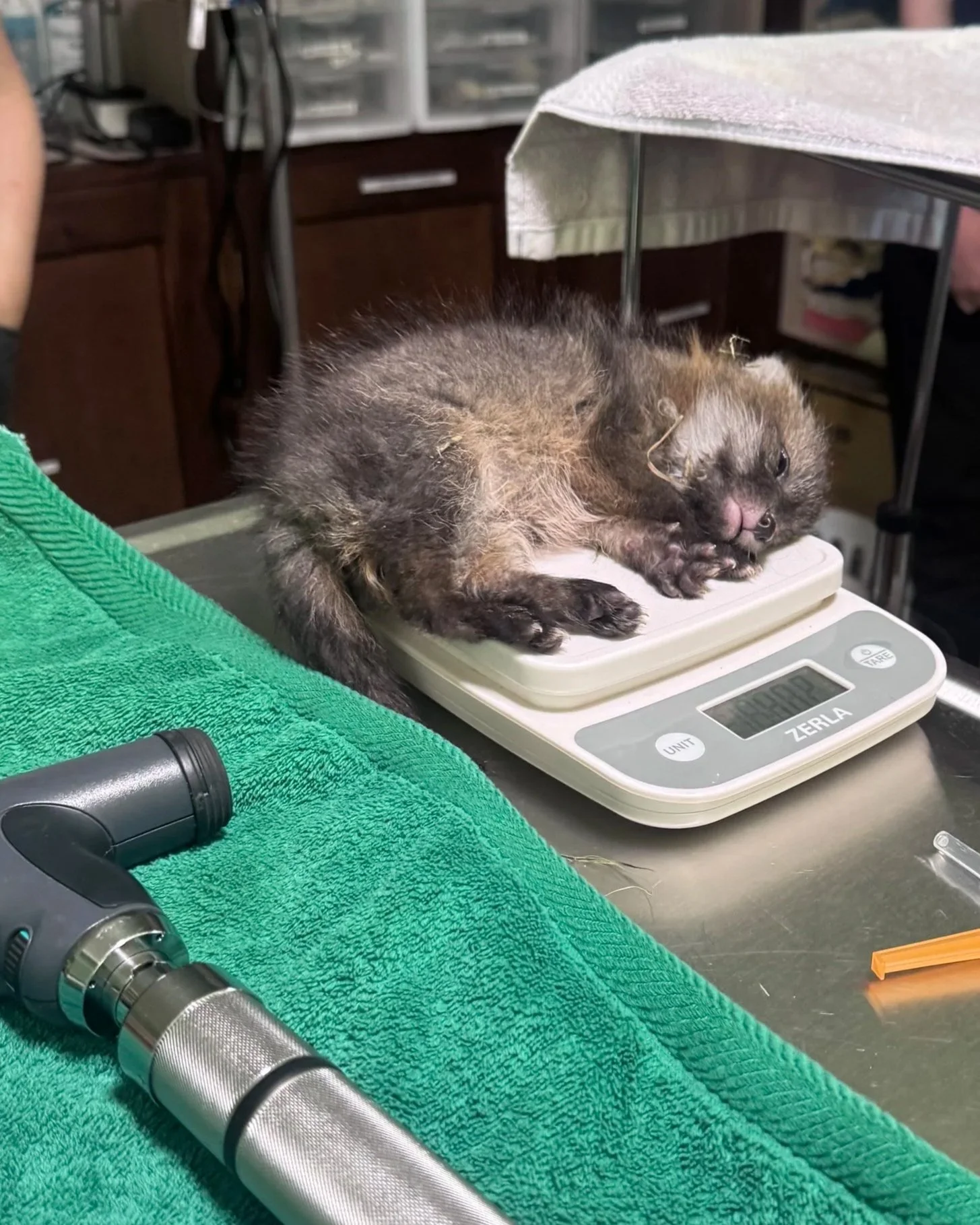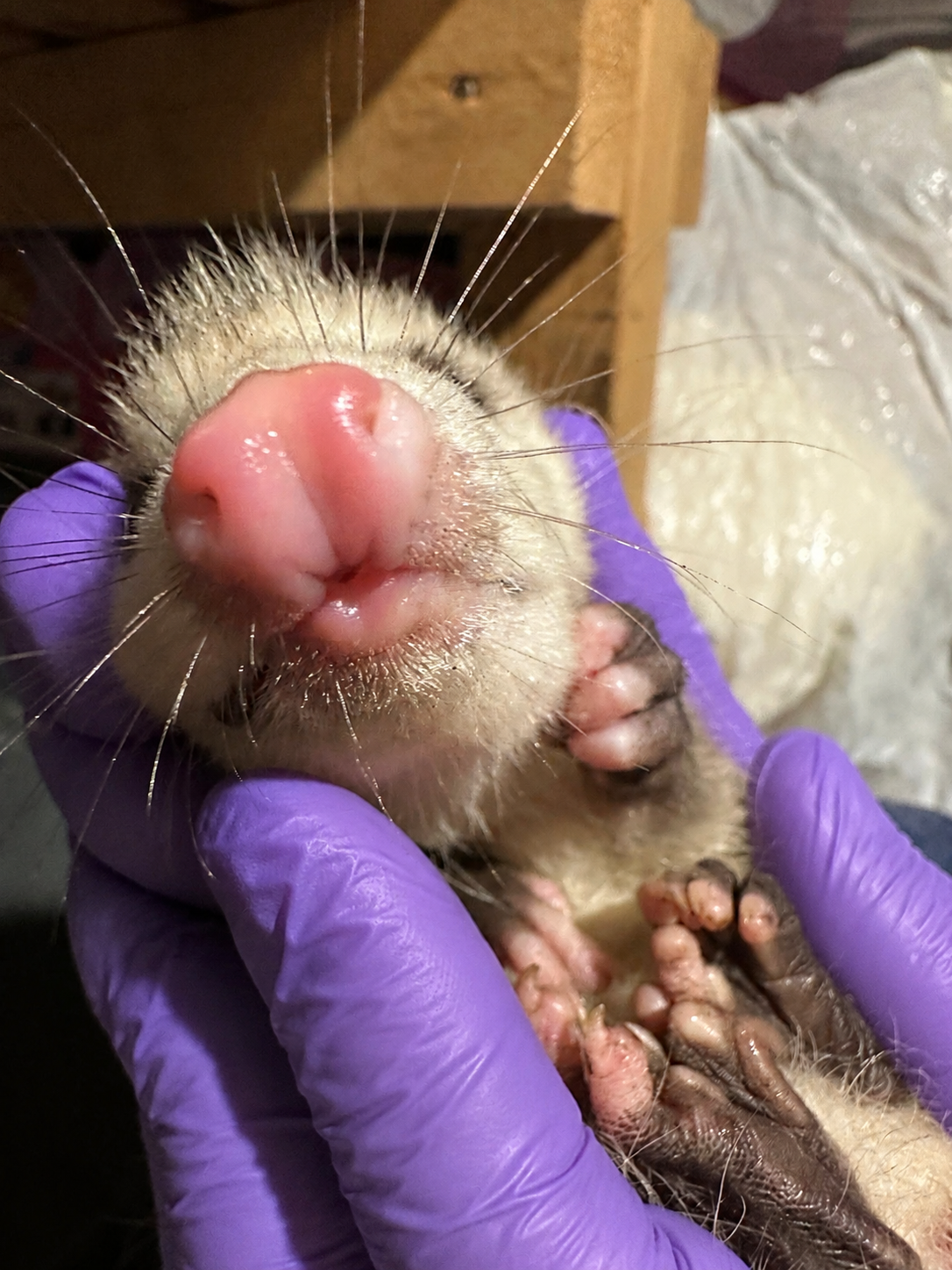
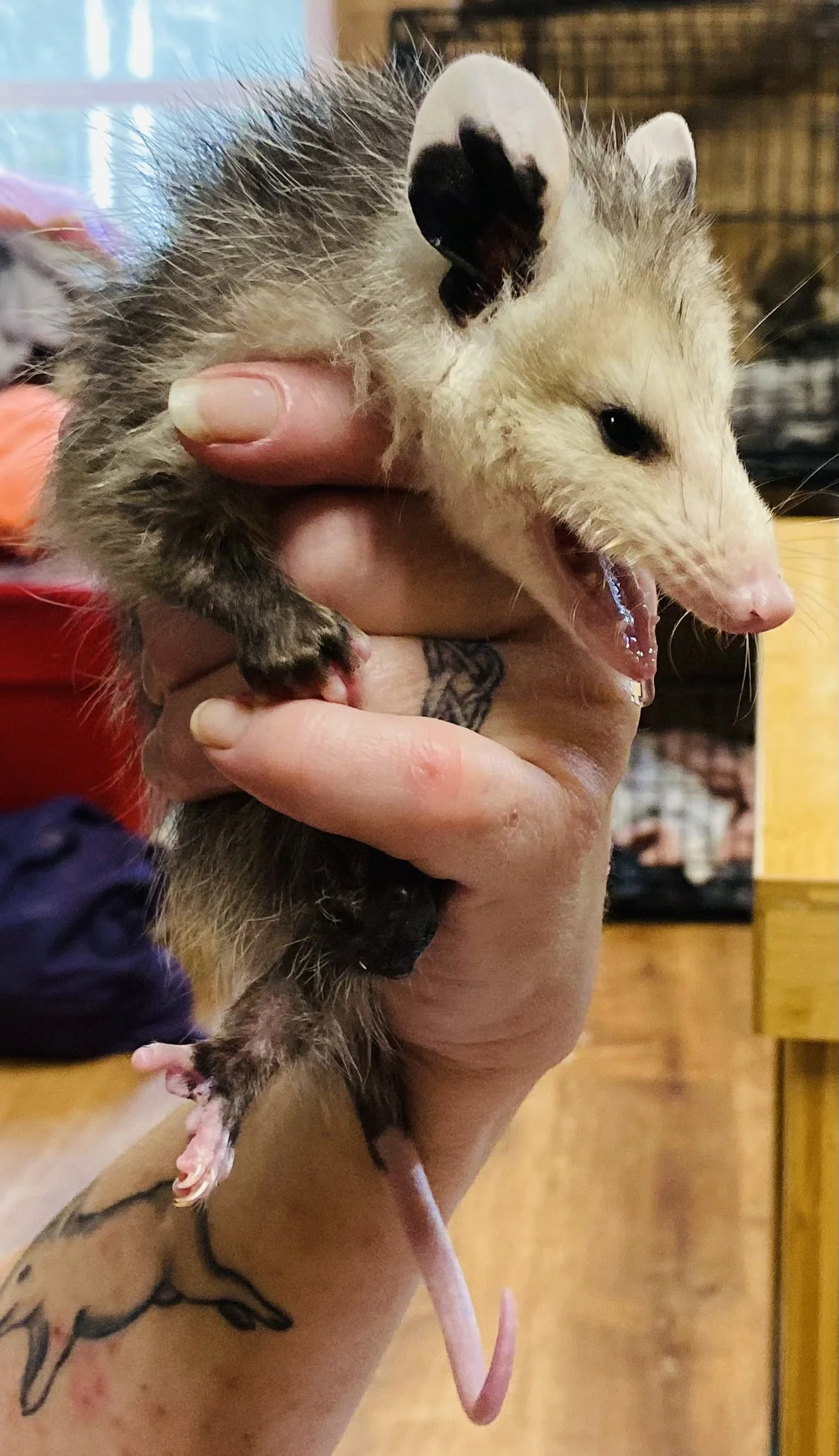
This is a juvenile opossum that we had in the summer of ‘25. He came in with 2 littermates and was later released. Opossums can be scary looking as adults but they’re actually quite docile when not threatened and helpful to the environment.
Though this picture may be alarming at first, this little guy is just napping under light sedation to keep him from being stressed during his wellness exam. With a positive outcome he was found to be slightly anemic which is being addressed with continued healthy food.
The gray fox is becoming prevalent in southern and coastal Maine. As an adult, he’ll tip the scales at a whopping seven to fifteen pounds. He’s the only fox able to climb trees using his rotating wrists and hooked claws which enable him to quickly and quietly escape predators.
YES! We have Virginia Opossums in Maine!
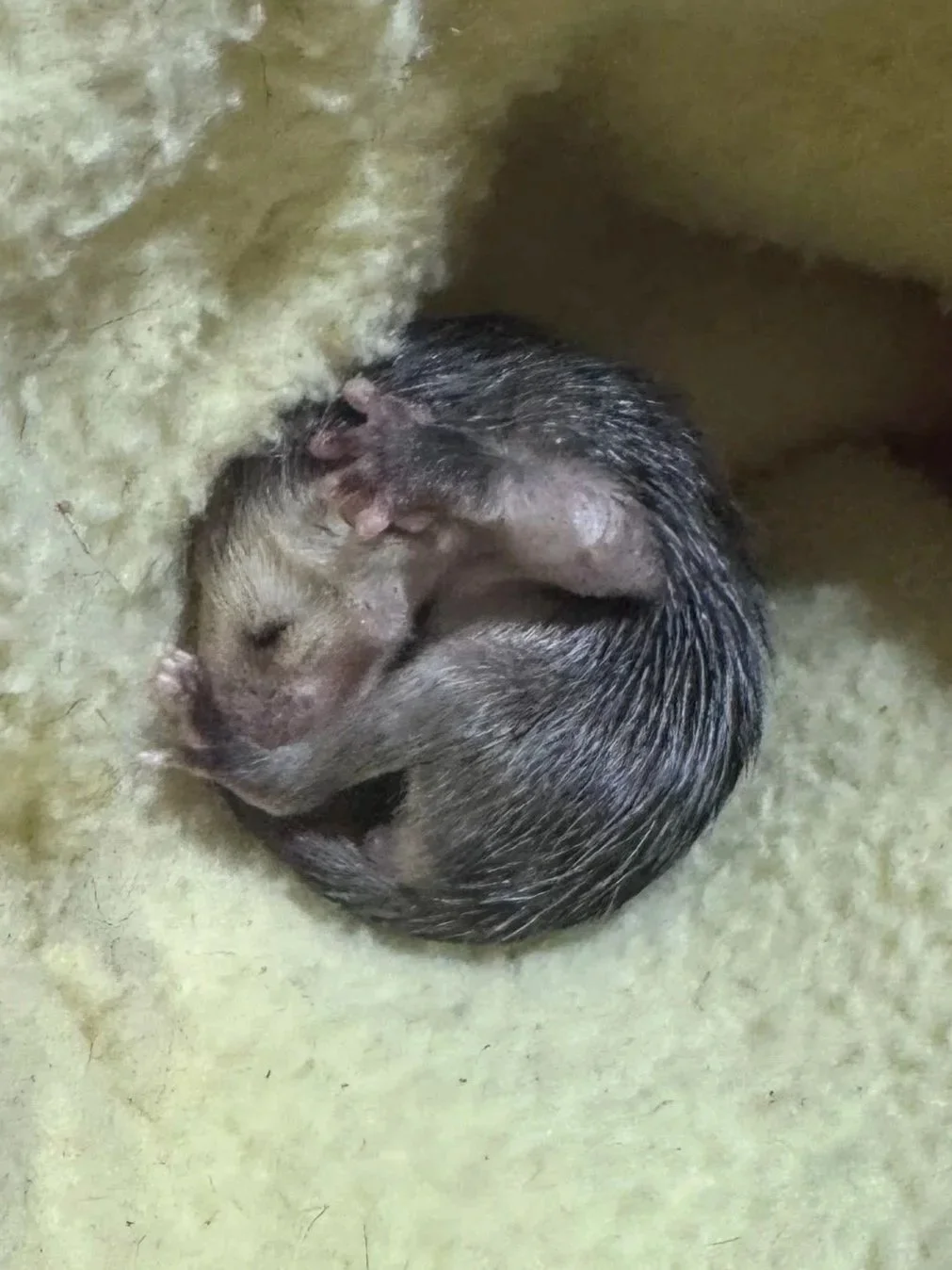
Opossums are marsupials, like kangaroos and stay in the pouch for about 2 months where they get nourishment from the mom. Opossum joeys aren’t able to suck because of the shape of their mouths so they feed by swallowing the mom’s nipple. When they come to us as orphans they have to be tube fed until they start to feed on their own. There are typically 6-13 joeys. The tiny one to the right is 1 of 13 that we have in our care now.
I’D LOVE TO SUPPLY SOME FORMULA!